

Tight Hip Flexors? Here’s Why It Happens and What You Can Do About It
- Lauren Walker
- Aug 14, 2025
- 4 min read

Do your hips feel stiff or sore — especially when standing up after sitting for a while? Do lunges or squats feel restricted, or does your lower back ache after a long day? If so, your hip flexors might be the culprit.
Tight hip flexors are one of the most common muscular imbalances people experience, regardless of fitness level. But the good news? They’re fixable. In this blog, we’ll explore why hip flexors get tight, the symptoms to watch for, and how to release and strengthen them for lasting relief.

What Are the Hip Flexors?
The hip flexors are a group of muscles that allow you to lift your knee and bend at the waist. The key players include:
Iliopsoas (psoas major and iliacus) – the deepest and most powerful hip flexor
Rectus femoris – part of the quadriceps that also crosses the hip joint
Sartorius – the longest muscle in the body, running from the hip to the inside of the knee
Tensor fasciae latae (TFL) – helps stabilize the pelvis and hip
These muscles are essential for walking, running, squatting, sitting, and pretty much every lower-body movement you do.

Why Are My Hip Flexors So Tight?
Tight hip flexors are rarely just about the muscles themselves. They’re usually a symptom of your daily habits, posture, and movement patterns. Here are the most common causes:
1. Too Much Sitting
Modern life has us sitting more than ever — at desks, in cars, on couches. Sitting keeps the hip flexors in a shortened position for hours, which over time leads to tightness and reduced flexibility.
2. Lack of Glute Activation
When the glutes are weak or underused, the hip flexors often pick up the slack, becoming overworked and tight. This imbalance can also tilt the pelvis forward (anterior pelvic tilt), increasing strain on the lower back.
3. Overtraining Without Recovery
If you're a runner, cyclist, or someone who trains legs frequently, your hip flexors are constantly engaged. Without proper stretching, mobility work, and rest, they can become chronically tight or fatigued.
4. Poor Posture
Slouching, leaning forward, or standing with an exaggerated lower back arch can shorten and over-activate the hip flexors, especially the psoas, which connects to your lower spine.
How Do I Know If My Hip Flexors Are Tight?
Common symptoms include:
A pulling or pinching sensation at the front of the hip
Limited range of motion when lunging or extending the leg behind you
Lower back stiffness or pain, especially after sitting
Difficulty standing fully upright after long periods of sitting
Anterior pelvic tilt (butt sticks out, belly pushes forward)
What You Can Do About Tight Hip Flexors
✅ 1. Stretch Them Regularly
Targeted hip flexor stretches can help lengthen the muscles and reduce tension.
Try this: Kneeling Hip Flexor Stretch
Start in a lunge position with your back knee on the floor.
Tuck your pelvis under (think tailbone toward the floor).
Gently push your hips forward until you feel a stretch in the front of your hip.
Hold for 30 seconds on each side. Repeat 2–3 times.
Bonus tip: Avoid overstretching your lower back while stretching. The stretch should come from the front of the hip, not your spine.
✅ 2. Strengthen the Glutes and Core
Strengthening your glutes and core muscles helps create balance and reduces the load on your hip flexors.
Exercises to try:
Glute bridges
Clamshells
Bird dogs
Dead bugs
Lunges (with good form)
✅ 3. Get Up and Move Frequently
Break up long periods of sitting by standing, walking, or doing some quick stretches every 30–60 minutes. Even just standing up and doing a few leg swings or lunges can help prevent your hip flexors from “locking up.”
✅ 4. Use Massage or Myofascial Release
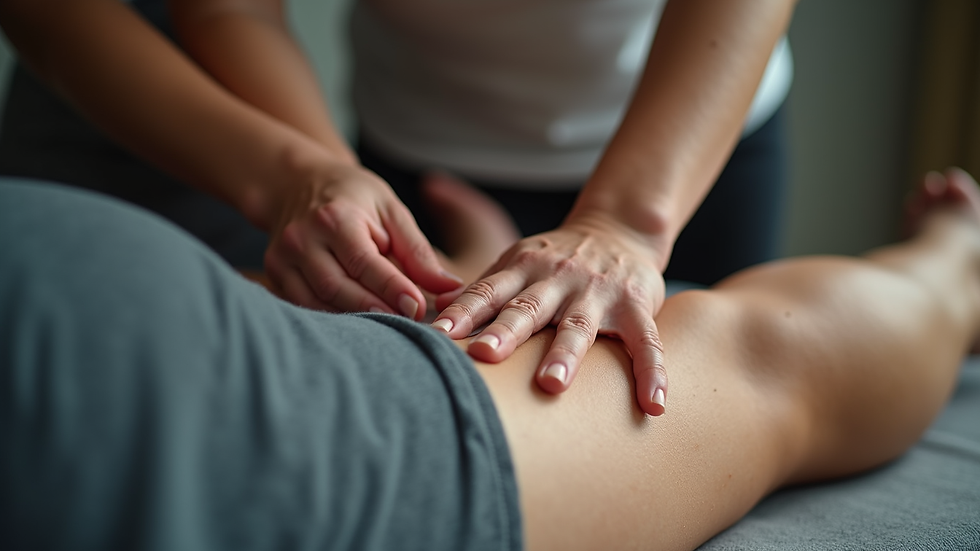
Massage therapy can help release trigger points and fascia around the hip flexors, especially the psoas and TFL. Foam rolling the quads, TFL, and hip area can also help improve mobility.
Note: The psoas is deep and hard to access — for this, seeing a trained massage therapist or bodyworker may be more effective than self-massage.
✅ 5. Improve Your Posture
When standing or sitting, keep your spine tall, your core engaged, and avoid letting your pelvis tilt forward. Ergonomic adjustments to your desk setup can make a big difference.

Final Thoughts
Tight hip flexors are common — but they don’t have to be your normal. With consistent stretching, strengthening, better posture, and movement habits, you can ease the tension and feel better in your hips, back, and legs.
If you’re dealing with chronic tightness or discomfort, consider working with a physical therapist, massage therapist, or movement coach to identify the root cause and build a plan that fits your body’s needs.
Your hips carry you through life — take care of them.
Want to learn more about how massage or movement therapy can help?
Relish Well-ness to the Core with our Relaxing Massage Sessions: Wellness Rituals offers effective alternative healing therapies such as Thai Yoga Massage or our Table Top Stretch Sessions. This unique healing therapy incorporates Yoga, pressure points, and reflexology, aiming to reduce body fatigue.
Relish A True Sense of Well-Being Through Expert Services
We use experienced approaches to promote good health in our clients through relaxing spa treatments and life-changing wellness services because We Care for You the Most!
Thank you for following us! Don't forget to find us via our website @www.myrituals.me or check out our latest blog posts on our Facebook and Instagram pages.
Let's stay connected through our social networks including Facebook, Instagram, and LinkedIn all are found at
Facebook : https://www.facebook.com/wellnessritualsme
Instagram: https://www.instagram.com/wellnessritualsme
You can always BOOK ONLINE!
Orlando Location: www.vagaro.com/mywellnessrituals
Longwood Location: www.vagaro.com/wellnessrituals-longwood
Text to Book: 407-535-2331. Thank you for following us!
You'll see that we have something new posted every day - so keep checking back!



Comments